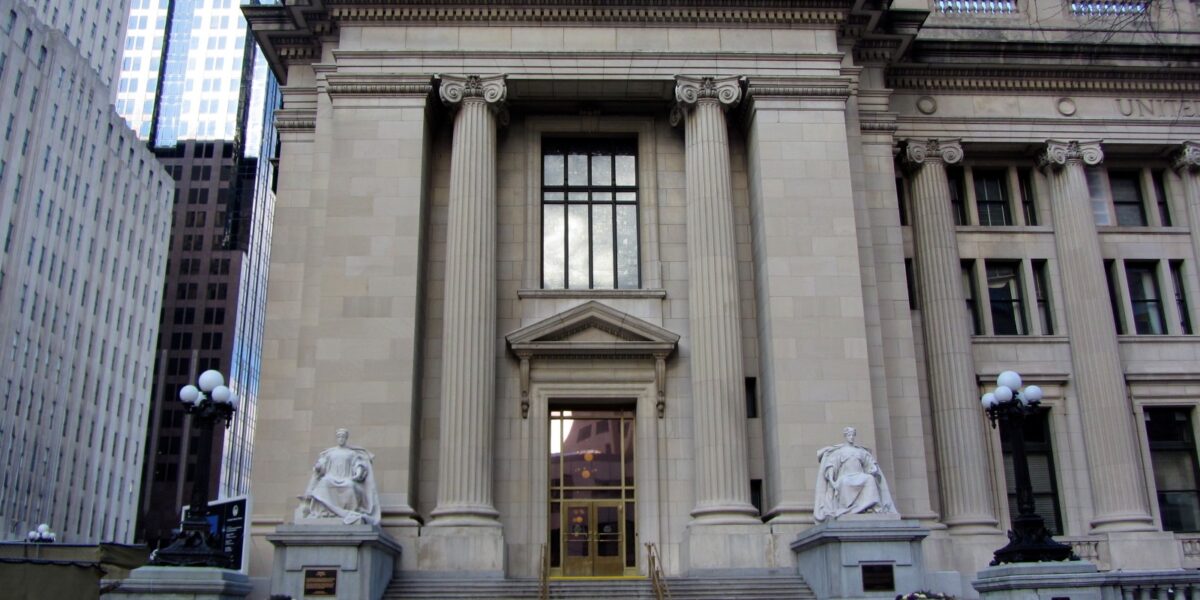
A Flathead County District Court judge sided with the state on August 10, upholding a wastewater-to-groundwater discharge permit issued to the Lakeside County Water and Sewer District by the Montana Department of Environmental Quality. The ruling ends a legal challenge that had put the permit’s future in question since spring.
Background on the Permit and Lawsuit
The DEQ approved the permit last year, authorizing the Lakeside district to discharge treated wastewater into groundwater through three rapid infiltration basins at a rate of up to 200,000 gallons per day. The agency’s environmental assessment concluded the project would not produce significant environmental harm.
In May, Citizens for a Better Flathead and the Confederated Salish and Kootenai Tribes jointly filed suit challenging that approval. Their central argument was that the DEQ failed to adequately weigh the cumulative environmental effects of a project that is designed to scale far beyond the initial permitted volume. The facility has a total design capacity of 900,000 gallons per day — more than four times what the current permit allows.
Judge Coffman’s Reasoning
District Court Judge Danni Coffman rejected those arguments in her August 10 ruling, deferring to the DEQ’s technical and scientific judgment rather than substituting the court’s own assessment. She found that the agency’s approach of reviewing each project phase separately — rather than conducting a single cumulative review of the entire build-out — did not constitute a legal failure.
Critically, Judge Coffman noted that any future discharge above the 200,000 gallons per day threshold will trigger a separate environmental review, a structure she found sufficient to address concerns about the long-term impacts of phased expansion.
The plaintiffs had submitted three expert reports arguing that the DEQ’s environmental review was inadequate, but those technical findings did not change the court’s conclusion that the agency acted within its authority and followed proper procedure.
What the Decision Means
The ruling affirms the DEQ’s discretion to segment environmental review of infrastructure projects into phases rather than requiring a comprehensive upfront analysis covering a facility’s maximum possible capacity. For the Lakeside district, it clears the path to begin operating under the approved permit without further legal delay.
For the plaintiffs, the decision leaves the door open to future legal or administrative challenges if and when the district seeks to expand operations beyond the current permitted volume. Each phase above 200,000 gallons per day will require its own DEQ environmental assessment, giving opponents additional review points as the project grows.
The outcome also has potential implications for how other water and sewer districts in northwestern Montana plan and permit similar infrastructure — particularly in Flathead County, where population growth continues to push demand on utility systems.
Broader Context
The case reflects ongoing tension in Montana between state environmental regulators and community and tribal groups seeking stricter oversight of water-related development. The Confederated Salish and Kootenai Tribes, whose treaty rights and interests are tied to regional water resources, were among the challengers, underscoring the stakes the case carried beyond local utility management.
The DEQ’s position throughout was that the environmental assessment process it conducted was thorough and legally sound. Judge Coffman’s deference to agency expertise follows a well-established judicial principle that courts generally avoid second-guessing technical determinations by regulatory agencies within their areas of statutory authority.
It remains unclear whether either plaintiff organization plans to appeal the ruling. For now, the Lakeside County Water and Sewer District may proceed under a permit that allows treated wastewater discharge into groundwater at the approved rate, with any future expansion subject to additional state review.
For more on Montana court decisions shaping state political and regulatory disputes, see the recent ruling in which a judge blocked an attorney general opinion and cleared two Republican lawmakers for the November ballot.