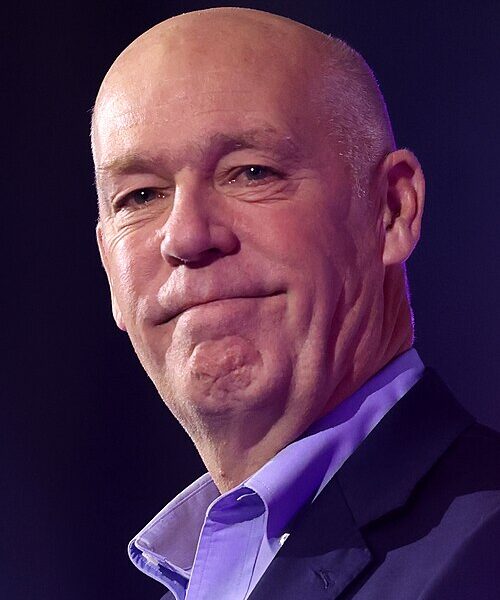
Montana Governor Greg Gianforte signed President Donald Trump’s Ratepayer Protection Pledge on July 8, 2026, committing the state to a framework designed to shift data center expansion costs away from utility ratepayers and onto the companies driving demand for power.
The five-point pledge, which Trump introduced in March 2026 after securing commitments from major technology firms including Amazon, Google, Meta, Microsoft, OpenAI, Oracle, and xAI, establishes requirements for large-scale data center operators building or expanding facilities in participating states. Gianforte becomes one of several governors to formally adopt the framework.
Core Requirements
Under the pledge, companies must secure new power supplies through construction, acquisition, or purchase agreements rather than drawing from existing grid capacity. They are also obligated to fund upgrades to power delivery infrastructure needed to serve their operations and to pay for electricity regardless of actual consumption levels.
The framework additionally requires participating companies to invest in local job creation and workforce development programs, as well as contribute to electric grid resilience and community resilience initiatives. The structure aims to allow data center growth while protecting existing ratepayers from bearing the financial burden of grid expansion.
Montana’s Position
Gianforte said that “Montana is proud to join the shared commitment to protect ratepayers,” signaling the state’s alignment with the Trump administration’s approach to managing rapid data center expansion driven by artificial intelligence development.
Montana’s adoption of the pledge reflects broader national debate over who bears the costs of the infrastructure demands created by AI and hyperscale computing facilities. As data centers consume enormous quantities of electricity, utilities across the West have faced pressure to expand generation and transmission capacity. The pledge framework attempts to address ratepayer concerns by requiring companies to internalize those costs.
The governor’s signature follows a period of heightened national focus on data center siting and power infrastructure. Several Western states have grappled with competing interests between attracting high-value technology investment and managing the environmental and financial impacts on existing electricity consumers.
No details were provided regarding specific data center projects in Montana that may be subject to the pledge terms or the timeline for implementation in the state.