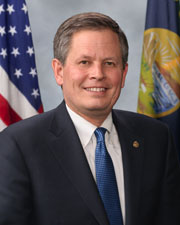
Sen. Steve Daines concluded his tenure leading the National Parks subcommittee this week, marking the end of a 22-year involvement with the panel that has grown increasingly focused on resource shortages within the federal park system.
Daines, a Montana Republican, chaired the final hearing on Tuesday in his role as co-chair alongside Sen. Angus King, a Maine Democrat who has worked alongside him for nine years. The subcommittee considered 28 bills on its agenda, with particular attention to Montana-specific legislation and broader funding proposals designed to address mounting operational challenges.
Workforce Crisis at National Parks
The hearing underscored growing strain on the National Park Service, which has shed roughly 4,000 permanent employees since January 2025 — a loss representing 24 to 25 percent of its workforce. The departures resulted from mass terminations, early retirements, buyouts, and pressured resignations, according to the National Parks Conservation Association’s documentation of the losses.
The administration’s budget request compounds the staffing crisis by cutting park service construction funding by 42 percent compared to prior levels. King noted during the hearing that he counted references to “limited resources” at least ten times in testimony from Charles Cuvelier, the National Park Service’s associate director, who represented the Department of Interior’s positions.
“The problem I have is those limited resources aren’t limited by accident or act of god, those resources are limited by the choices of this administration,” King said, drawing a contrast between infrastructure challenges and policy decisions shaping park operations.
Montana Legislation and Broader Initiatives
Daines advanced two Montana-focused measures during his final hearing. The American Battlefield Protection Program Amendments Act would direct federal support toward preserving battlefields from the Great Sioux and Nez Perce Wars, reflecting the state’s historical significance. He also championed the Law Enforcement Officer and Firefighter Recreation Pass Act, introduced jointly with California Republican Rep. Tom McClintock and Montana Sen. Tim Sheehy, which would grant free annual National Parks passes to federal, state, and tribal law enforcement officers and firefighters.
On a broader scale, the subcommittee discussed the America the Beautiful Act, a bipartisan proposal to extend the National Parks and Public Land Legacy Restoration Fund. The bill proposes allocating $2 billion annually for eight years through 2033, intended to address deferred maintenance and operational needs across the system.
A separate measure, the National Park System Long-Term Lease Investment Act introduced by North Carolina Republican Thom Tillis in July 2025, would authorize the Interior Secretary to extend certain long-term leases without requiring new public bidding — a shift aimed at reducing administrative burden and modernizing concessions management.
End of an Era
King’s characterization of the hearing as “our last rodeo” underscored the symbolic weight of Daines stepping back from the role after a 32-year involvement with national parks policy. Daines served 22 years as the subcommittee’s ranking member before becoming co-chair a decade ago, making him one of Congress’s longest-serving voices on park system governance.
The timing of his departure — one week before the House August recess — reflects the compressed legislative calendar as Congress heads toward the November general election and the 2026 campaign cycle intensifies. Daines has remained active on other priorities affecting Montana’s economy, including trade and resource sector concerns.
The resource constraints now dominating subcommittee discussions stand in sharp contrast to the scale of previous park system investments. King referenced the last major overhaul of national parks management, noting that the committee rewrote the concessions law roughly 30 years ago, before the era of current budgetary constraints took hold. The original Mission 66 initiative, a 10-year, billion-dollar park service modernization effort from 1966, represented the kind of sustained capital commitment park advocates say the current system lacks.