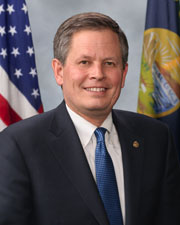
Montana Sen. Steve Daines used a Senate Energy and Natural Resources Committee hearing Monday to press for grizzly bear delisting and advance legislation aimed at clearing a backlog of deferred maintenance on federal lands, pressing President Trump’s nominee for Assistant Secretary for Fish, Wildlife and Parks on both fronts.
The Hearing
The committee met in Washington on June 23 to consider the America the Beautiful Act, a bipartisan measure that would direct funding toward deferred maintenance projects on lands managed by the Fish and Wildlife Service and the National Park Service. The committee advanced the bill with a stated goal of delivering it to President Trump’s desk before July 4.
Daines questioned Kevin Lilly, Trump’s nominee for Assistant Secretary for Fish, Wildlife and Parks, on two priorities: his commitment to reducing the federal lands maintenance backlog and his position on delisting grizzly bears under the Endangered Species Act.
Lilly affirmed his support for addressing deferred maintenance and pledged to work with states on reducing the backlog, satisfying a request Daines made directly during the hearing.
Grizzly Bear Delisting
On grizzly bears, Daines laid out a numerical case that both the Greater Yellowstone Ecosystem and Northern Continental Divide populations have significantly exceeded federal recovery targets. The Greater Yellowstone herd currently numbers an estimated 1,030 bears against a recovery benchmark of 500, while the Northern Continental Divide population stands at roughly 1,138 — well above its 800-bear target.
“We need to celebrate the fact that this amazing species has recovered,” Daines said. “They’re no longer endangered.”
Daines, who noted he hunts spring bears and backpacks in Montana at elevations above 10,000 feet, argued the data justify returning management authority to the state. Montana has indicated it would implement strict hunting controls if federal protections are removed.
The Fish and Wildlife Service is currently reviewing the Section 4D rule governing grizzly bears. When Daines asked whether Lilly would support delisting if that review warrants it, Lilly offered measured support: “Yes, sir… I am very much supportive of working in any way that we can with the Secretary, through 4D rules, etcetera.”
Lilly stopped short of a firm commitment to recommend delisting, framing his answer around process and coordination with the Interior Secretary rather than a predetermined outcome.
America the Beautiful Act
The broader infrastructure measure advanced by the committee addresses a long-standing federal challenge: the accumulation of unaddressed maintenance needs on public lands managed by the Fish and Wildlife Service and the National Park Service. Daines asked Lilly directly for a commitment to work with states on closing that gap, and Lilly obliged.
The committee’s push to reach the President’s desk before July 4 signals bipartisan momentum on at least one element of the federal lands agenda at a moment when other public lands questions — including oil and gas leasing in Montana and North Dakota — are generating their own activity through the Bureau of Land Management.
What’s Next
The America the Beautiful Act now moves toward a full Senate floor vote if leadership schedules it in time for the July 4 target. A House companion process would also need to proceed before the measure could reach the White House.
On grizzly bears, the Fish and Wildlife Service’s Section 4D review will determine whether a formal delisting proposal moves forward. State officials and wildlife managers in Montana have long pressed for that outcome, arguing the federal government has been slow to acknowledge a recovery success that population data made apparent years ago.
Lilly’s confirmation itself remains a pending vote for the full Senate, meaning his commitments at the committee level will be tested once he is formally installed — if confirmed — at the Department of the Interior.
Daines sits on the Energy and Natural Resources Committee, giving him direct leverage over both nominees and legislation affecting Montana’s vast federal land holdings, which cover roughly 30 percent of the state.