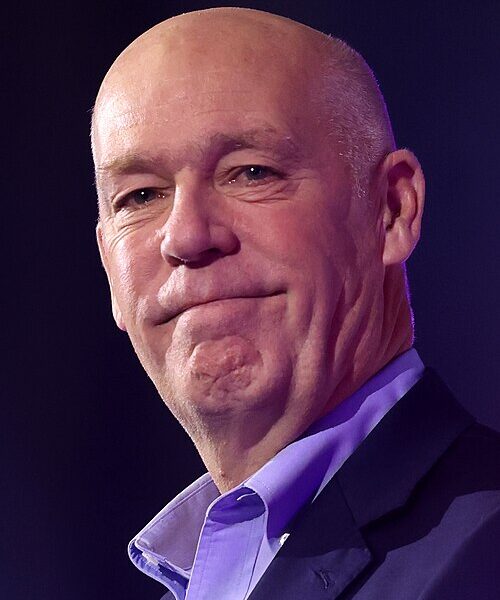
Governor Greg Gianforte met with five South Korean energy executives in Billings on Wednesday, making a direct pitch for expanded coal exports as Montana looks to grow its share of Asian energy markets — even as South Korea has committed to phasing out coal entirely by 2040.
The Meeting
The gathering took place at the DoubleTree Hotel in Billings as part of a summit hosted by Navajo Transitional Energy Company, formatted as a “fireside chat.” The South Korean attendees represented state-owned power generating companies, and Gianforte used the occasion to highlight Montana’s position as the nation’s largest holder of recoverable coal reserves.
“In Montana, we mine about 26 million metric tons of coal every year — about half of that is exported — and if you’re willing, we’d like to send you more,” the governor told the group.
The overture comes as Montana continues building relationships with Asian energy buyers, a market that has already become a key outlet for the state’s coal industry. Signal Peak Mine near Roundup ships roughly 95% of its coal to Asia, and around a third of Spring Creek Mine’s production near Decker reaches Asian buyers as well.
A Complicated Market
South Korea currently generates about 30% of its electricity from coal, making it a legitimate near-term customer. But the country’s government has pledged to retire all coal-fired power plants by 2040 — a timeline that raises questions about the durability of any expanded export relationship built around coal.
The domestic leasing picture adds further complexity. The most recent attempt to open new federal coal reserves in the Powder River Basin ended in rejection last October, when Navajo Transitional Energy’s bid on the Spring Creek Mine lease was turned down. The company had offered $0.001 per ton — a total bid of roughly $186,000 — a figure that drew sharp contrast with the last successful Powder River Basin lease sale, a 2012 Wyoming transaction that fetched $793 million, or $1.10 per ton for 721 million tons.
Despite congressional action clearing the way for new leases, the federal government has not put any new Powder River Basin coal leases up for bid. Montana’s all-Republican congressional delegation helped remove an amendment that had prohibited federal coal sales in the basin, a change signed into law last year, but no new lease offerings have materialized since.
Delegation Support
Senator Steve Daines reinforced the governor’s message, framing coal in economic and national security terms. “Coal is an engine to our economy,” Daines said. “The industry supports hundreds of jobs and protects America’s energy dominance.”
The delegation’s push to restore Powder River Basin leasing reflects a broader effort in Montana to stabilize the coal sector against a backdrop of shrinking domestic demand and uncertain federal policy. Gianforte’s direct engagement with foreign buyers represents a parallel track — attempting to shore up export markets even as the leasing framework for new domestic production remains stalled.
What’s Next
Whether Wednesday’s meeting translates into formal export agreements remains to be seen. South Korea’s energy transition timeline means any new coal import commitments would likely be framed as short- to medium-term arrangements bridging the gap before the country’s 2040 coal retirement target.
On the leasing front, Montana producers and the delegation will continue pressing the federal government to move forward with Powder River Basin lease sales now that the legislative barrier has been removed. The outcome will have significant implications for the state’s longer-term coal production capacity and the export volumes Gianforte is pitching to buyers abroad.
Montana’s energy economy is navigating competing pressures on multiple fronts, with the coal sector seeking to extend its market reach internationally even as domestic policy and global energy trends create an uncertain operating environment at home.