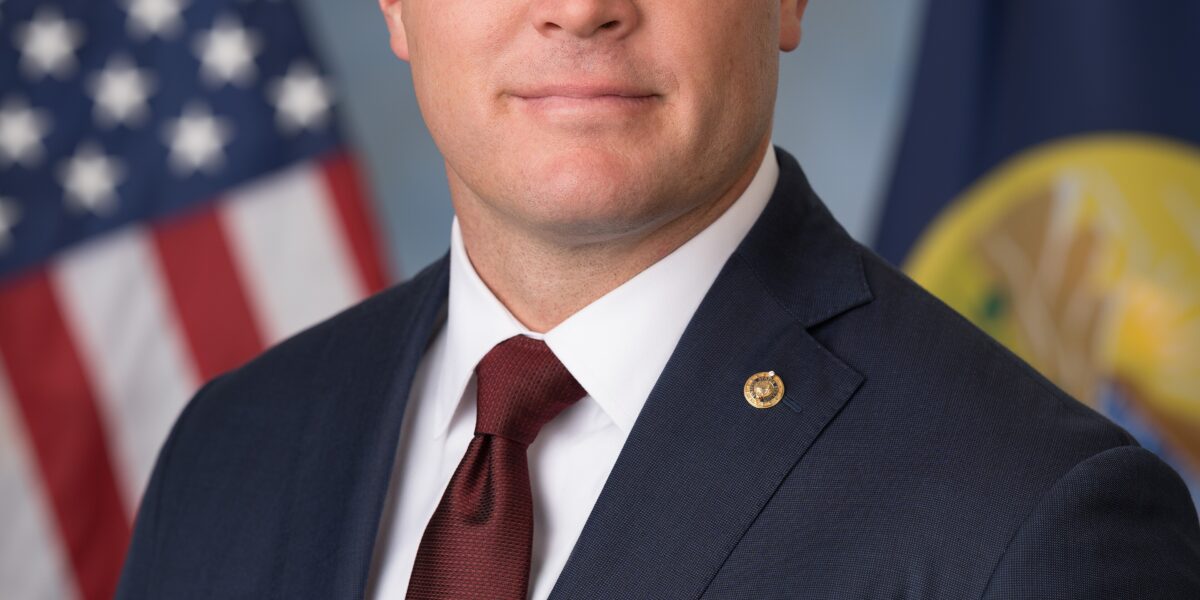
Montana’s junior senator is sounding the alarm over what he calls a dangerous gap between American and Chinese shipbuilding capacity — one he argues has left the United States strategically exposed in a way that could take years, possibly decades, to fully reverse.
Sen. Tim Sheehy (R-Mont.), a former Navy SEAL, detailed the severity of the situation during an appearance on the “Fox News Rundown” podcast, describing the erosion of American shipbuilding as both a military and industrial crisis that both parties are only now beginning to take seriously.
A Gap Decades in the Making
Sheehy attributed the problem to complacency during a prolonged stretch of relative peace, arguing that the United States allowed its maritime industrial base to decay over roughly 30 years. Compounding the problem, he said, was the transformation of former shipbuilding sites along American waterfronts into condominiums and high-end real estate developments — a physical dismantling of the infrastructure the country would need to rapidly rebuild capacity.
The numbers he cited are stark. “Right now, our fleet, when you compare us to China, they build ships 230 times faster than we do. Their shipyards can turn around repairs 90% faster than we can,” Sheehy said. Those figures represent not just a procurement lag but a wartime logistics vulnerability: a Navy that cannot quickly repair or replace damaged vessels faces compounding losses in any extended conflict.
Sheehy noted that while rebuilding the Army could take one to two years and reconstituting Air Force capacity might require up to five years, restoring a competitive shipbuilding industry presents an even longer timeline given the specialized infrastructure, skilled labor, and supply chains involved.
Trump Administration’s Response
The Biden-to-Trump transition brought a marked shift in executive attention to maritime defense. President Trump signed an executive order on April 9, 2025, directing Cabinet agencies to develop concrete strategies for boosting domestic shipbuilding output. The White House also created the Maritime Action Plan, known as MAP, as a coordinating framework for revitalizing the broader maritime sector.
Trump had previewed the ambition behind those moves during his joint address to Congress, vowing to “resurrect” the American shipbuilding industry, and followed that with an announcement at Mar-a-Lago on December 22, 2025, of a new class of warship to be called the “Trump-class” battleship.
The president framed the effort in blunt terms: “We used to make so many ships. We don’t make them anymore very much, but we’re going to make them very fast, very soon.”
Bipartisan Recognition, Unanswered Questions
Sheehy noted a degree of rare bipartisan convergence on the issue, saying members of both parties have acknowledged that the Navy has been systematically under-resourced over many years. That consensus, however, does not automatically translate into the workforce training pipelines, shipyard construction, and industrial investment that experts say would be necessary to close the gap with China in any meaningful timeframe.
The senator’s background as a combat veteran and businessman has informed his focus on defense-industrial capacity since arriving in the Senate. Earlier this year, Sheehy joined bipartisan legislation to extend hazard pay to prescribed burn crews and smokejumper trainees — a separate but related effort to shore up federal workforce capacity in a sector that has also seen investment lag behind operational demand.
What Comes Next
The Maritime Action Plan remains the primary executive vehicle for translating the administration’s stated urgency into measurable output. Congress will ultimately control appropriations, and Sheehy’s public engagement on the issue signals he intends to make shipbuilding investment a legislative priority as the Senate works through defense authorization and spending measures.
For Montana, a landlocked state with no shipyards of its own, the issue is less about local economic impact than about the senator’s broader national security profile — and his effort to shape the Republican Party’s approach to rebuilding an American defense-industrial base that, by his own account, has been hollowed out over a generation.