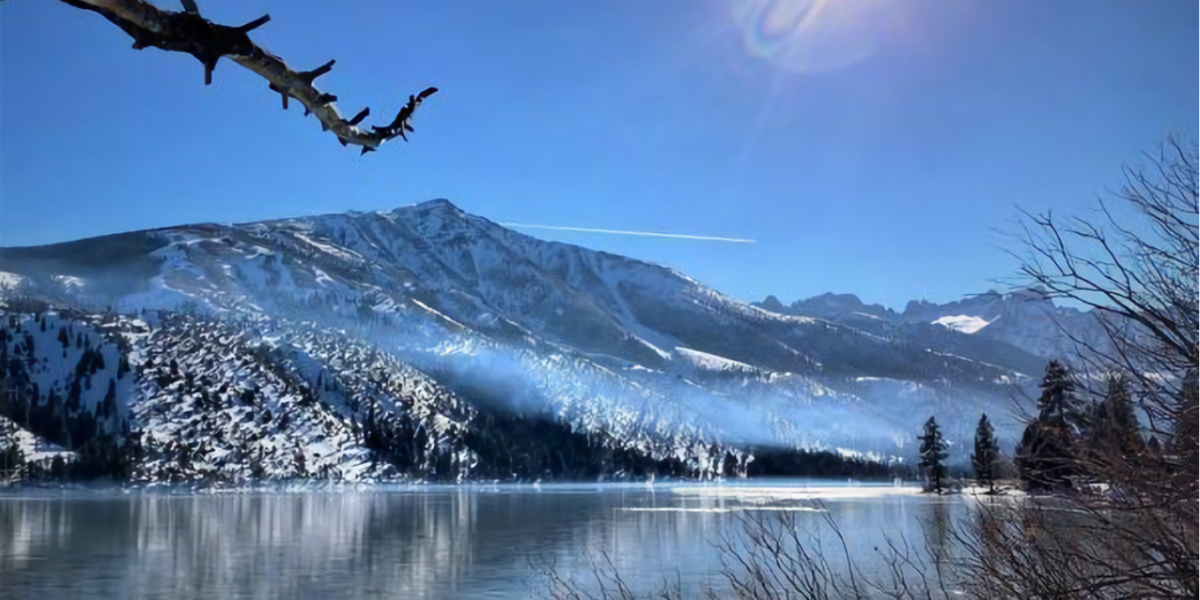
A small aircraft carrying elected officials, landowners, and emergency managers swept over Park County this week as part of an effort to build a community wildfire protection plan for the region. The one-hour flight, conducted in a Cessna 210 piloted by Cassidy Powers, traced terrain from Gardiner to Jardine — including the scars left by two significant wildfires that have shaped the county’s landscape in recent decades.
A Bird’s-Eye Look at Fire Country
The aerial survey was organized through a partnership between the Park County Environmental Council and EcoFlight, a nonprofit that uses small-plane flights to give decision-makers a firsthand view of environmental conditions. EcoFlight pilot Chris Benson flew alongside Powers, while Ashley Sites — a wildland firefighter and fire and fuels consultant with 37 years of experience — served as the flight’s guide, pointing out key terrain features and areas of concern.
The route took participants over the site of the 2020 Bridger Foothills Fire as well as the Fridley Fire scar, which dates to 2001. Seeing those burn areas from the air gave participants a clearer sense of how fire moves across Park County’s rugged landscape and where future risk is concentrated.
After landing, participants gathered to discuss practical steps for reducing wildfire danger around rural homes and improving firefighter safety in the county’s more remote areas — conversations that will feed directly into the community wildfire protection plan under development.
A Season of Concern
Sites, who has spent nearly four decades working on wildfires across the West, said conditions this year are particularly worrisome. “Given the state of drought in the western United States, there’s going to be a lot of activity at the same time,” she said, underscoring the urgency of getting a protection plan in place before fire season peaks.
Benson echoed that concern, emphasizing how much a little advance work can accomplish. “If we can put a little planning in now, it can go a long way,” he said.
Park County’s terrain — spanning the foothills near Livingston to the mountainous corridors leading into Yellowstone — presents particular challenges for wildfire response. Remote access roads, scattered rural homesteads, and dry grass and timber all factor into the risk equation that planners are trying to address.
Public Meetings Open to Residents
The aerial survey was designed to be only one piece of a broader community engagement process. Public input meetings were scheduled for June 25 and June 26 to gather feedback from residents as planners work to finalize the protection strategy.
The June 25 session was held at the Pray at Paradise Valley Fire Service Area Fire Station, located at 1140 East River Road in Pray, running from 5 p.m. to 8 p.m. The June 26 meeting took place in Livingston at Park County Rural Fire District Station 1, at 304 East Park Street, also from 5 p.m. to 8 p.m.
Those sessions gave rural landowners and community members a direct role in shaping how the county prioritizes fire mitigation — from defensible space requirements around structures to road access standards that affect how quickly firefighters can reach a blaze.
Building a Plan Before the Flames Arrive
Community wildfire protection plans have become an increasingly important tool for rural Montana counties trying to manage fire risk in an era of longer and more intense wildfire seasons. Such plans typically help communities qualify for federal and state mitigation funding, coordinate pre-suppression efforts between local fire districts and state agencies, and set priorities for fuel reduction projects on both private and public land.
Park County’s effort reflects a growing recognition across Montana that fire preparedness requires more than reactive suppression — it demands systematic, community-driven planning that begins well before smoke appears on the horizon. With drought conditions already elevated across the region and fire season getting underway, county officials and local fire managers appear determined to get the groundwork in place while time remains.
For more on Montana environmental and land-use decisions affecting local communities, see coverage of the Calvert Tungsten Mine legal challenge near Butte.