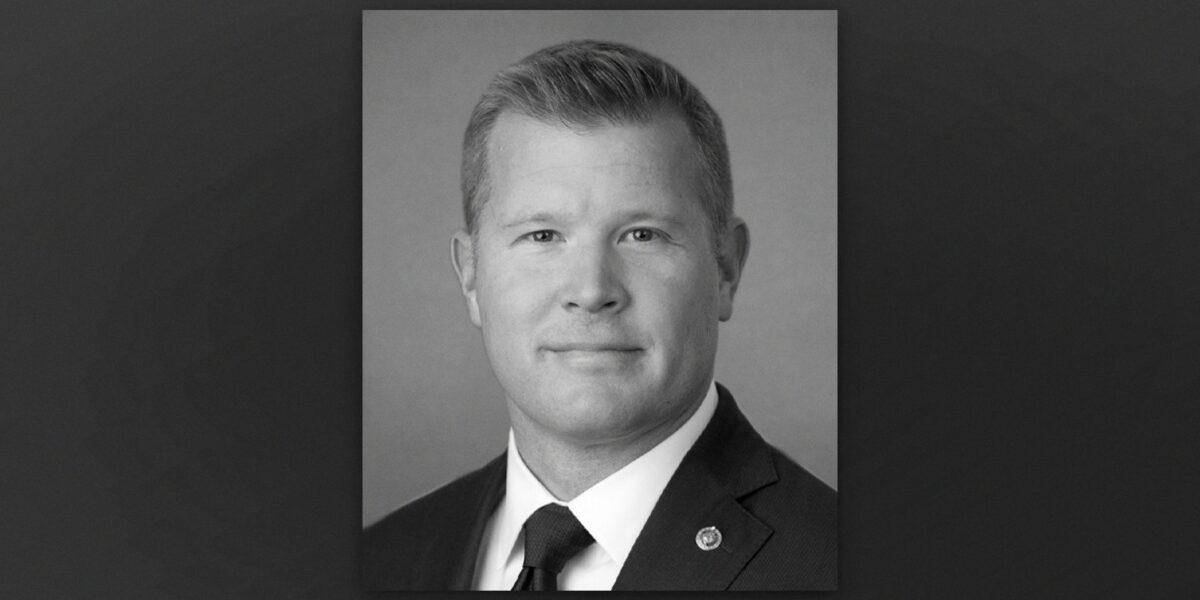
U.S. Senator Tim Sheehy joined roughly 150 rail, tourism, and government leaders in Helena last week for the Greater Northwest Rail Summit, lending his support to a regional push to restore long-dormant passenger rail service across Montana and the broader West.
The three-day summit, held August 25–27, brought together participants from eight Western states and was cosponsored by the Big Sky Passenger Rail Authority (BSPRA). It marked the fifth annual gathering of the conference, which has become a central forum for advocates working to revive intercity passenger rail in the Northern Rockies and Pacific Northwest.
A Route Discontinued for Decades
At the heart of the effort is the proposed Big Sky North Coast Corridor, which would resurrect a version of the old North Coast Hiawatha — a passenger route stretching more than 2,300 miles between Chicago and the Pacific Northwest. Amtrak discontinued the service in the 1970s, citing budget pressures, leaving a wide swath of the northern interior without direct rail connections.
Potential stops along the revived corridor include Big Timber, Livingston, and Bozeman, though final station selections have not been confirmed. BSPRA, chaired by Missoula County Commissioner Dave Strohmaier, has already submitted the first planning phase to the Federal Railroad Administration under the Corridor Identification and Development Program, and the authority is awaiting approval to enter the second phase.
Backers project the corridor could generate roughly $270 million in economic impact, attract approximately 426,000 passengers annually, and produce around $40 million in ticket revenue. Currently, Montana’s only passenger rail service is the Empire Builder, which runs along the state’s northern edge; a typical ticket west of Whitefish runs about $2,500.
Sheehy Makes the Case
Sheehy, the Belgrade-based founder of aerial firefighting company Bridger Aerospace who won his Senate seat in 2024, has positioned himself as a supporter of practical rail investment — not as a subsidized transit ideology but as an economic and infrastructure need. He drew a contrast between freight and passenger service, telling attendees, as first reported by the Bozeman Daily Chronicle, “We may have great freight rail infrastructure, but passenger rail is sorely needed.”
He also pushed back on the notion that the route is merely a tourism amenity: “Yes, it’s tourist-focused, but it’s also functional; it will get you from Chicago to Seattle,” Sheehy told the Chronicle.
At the summit, Sheehy pointed to California’s high-speed rail program — originally projected at $33 billion and now estimated at $126 billion — as a cautionary tale in rail planning, suggesting that Montana and the region should pursue a more disciplined and cost-conscious approach.
Political and Regional Context
The summit drew attendees from states across the West, reflecting broader regional interest in passenger rail expansion as a complement to highway and air travel in areas with limited commercial flight options. Previous BSPRA gatherings have built momentum for the corridor concept, including a 2025 conference hosted at Livingston’s historic retired railroad depot.
For Montana, the corridor proposal carries both economic and political dimensions. Rural communities along the potential route — including those in the Yellowstone Valley — have long lacked direct intercity transit options, and rail advocates argue the corridor could link those towns to major economic hubs without requiring state residents to compete for scarce airline seats or drive long distances.
Sheehy’s attendance signals at least some Republican Senate support for the planning process, though federal funding decisions and BSPRA’s progression through the FRA’s review program will ultimately shape whether the project advances from concept to construction. The authority’s next major milestone is clearance to enter the second planning phase, a step that will determine the scope and timeline of more detailed engineering and environmental review.
Whether momentum from last week’s Helena summit translates into appropriations and federal green lights remains to be seen, but the fifth consecutive gathering of Western rail stakeholders suggests the effort is more than a passing political moment.