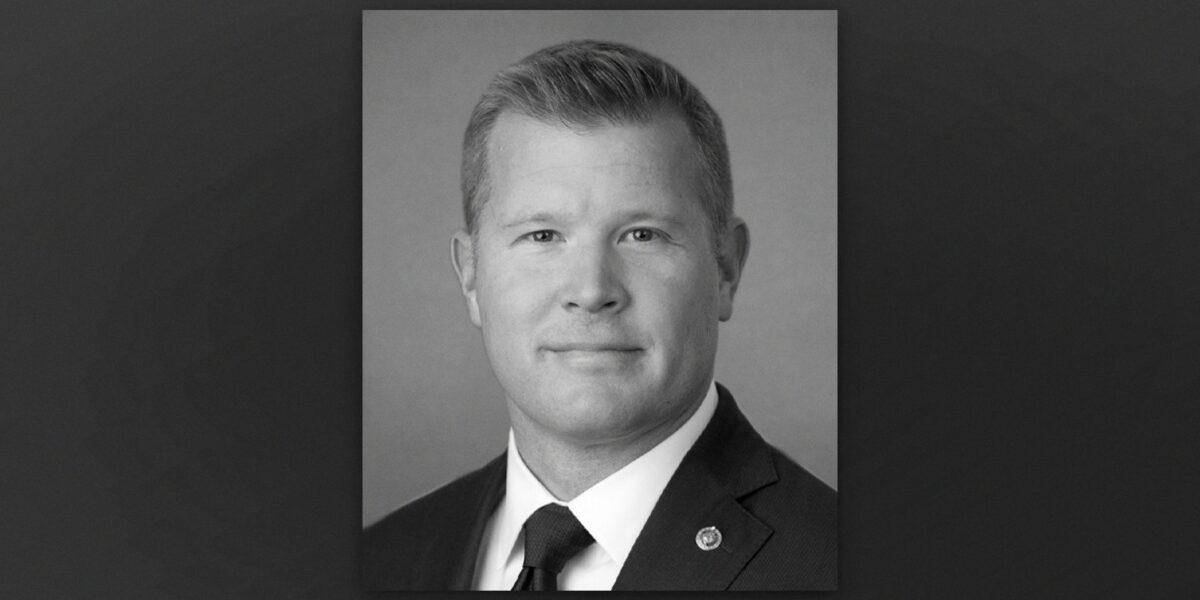
Montana Sen. Tim Sheehy has circulated a draft letter in Congress urging President Donald Trump to immediately transfer wildfire suppression responsibilities away from the U.S. Forest Service and place them under a newly created federal wildfire agency — a push that has emerged as one of his signature policy priorities since taking office in 2025.
The Proposal
The undated, unsigned letter addressed to President Trump calls for a 90-day executive order to consolidate firefighting authority on a temporary basis under a new Wildland Fire Service. The draft also seeks the creation of a national database cataloguing all federal, state, and local firefighting assets that could be mobilized during emergencies.
Sheehy’s office declined to confirm or deny authorship of the letter, though the document is attributed to him. In a separate statement, Sheehy framed the effort as an extension of the administration’s broader vision. “Last year, President Trump laid out a vision for a unified, centralized command for our federal wildfire response, and I am working to help him implement his plan,” he told the Billings Gazette.
He added that he is “working on a number of executive actions to include combining our fire funding,” signaling an intent to pursue the consolidation through the executive branch as well as through Congress.
Context: Fire Costs and Congressional Momentum
The proposal arrives as federal fire managers are contending with near-record demand for firefighting personnel and equipment across the West. Wildfire suppression already accounts for more than half of the Forest Service’s total annual budget — a financial reality that has driven years of debate over whether the agency should retain primary responsibility for fighting fires at all.
Congress took a partial step toward restructuring earlier this year, stopping short of moving the wildfire budget to a standalone Wildland Fire Service but authorizing a feasibility study on the idea. Results from that study are expected in early February.
A bipartisan group of senators initially indicated openness to Sheehy’s consolidation concept, according to Doug Crandall, legislative liaison for the National Association of Forest Service Retirees. However, Crandall noted that most of those senators pulled back once they saw the full scope of the proposal — particularly the speed and sweeping nature of the transfer it envisions.
Skepticism From the Field
Veteran fire managers have raised practical concerns about restructuring during an active fire period. Tim Love, a retired Lolo National Forest district ranger who spent 30 years with the agency — including roughly two decades leading the Seeley Lake Ranger District before retiring in 2013 — cautioned that a major reorganization mid-crisis carries real operational risk.
“You’re in the middle of the fight — you don’t need a distraction,” Love told the Billings Gazette, summarizing the concern shared by those with on-the-ground firefighting experience.
Critics within the agency’s retired ranks worry that breaking up command structures and logistics chains that have developed over decades could hamper rather than help the response to large fires, even if the long-term goal of a dedicated wildfire agency has merit.
What Comes Next
The feasibility study due in February will likely shape the congressional debate heading into 2027, when the Montana Legislature also convenes its next regular session and state fire policy questions will again be on the table. For now, the Sheehy proposal sits in a holding pattern — circulating in Washington, generating early bipartisan interest that has since cooled, and awaiting either a formal White House executive order or renewed congressional action.
Sheehy’s push reflects a broader Republican appetite for consolidating and streamlining federal land management functions, a theme that has run through multiple policy debates in Montana’s congressional delegation. How the administration ultimately responds to the letter — and whether enough Senate support can be rebuilt — will determine whether the proposal advances beyond a draft or quietly stalls before the feasibility study lands.