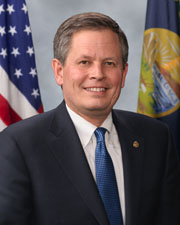
U.S. Sen. Steve Daines (R-Mont.) introduced a Senate resolution Wednesday to mark the fourth anniversary of the Supreme Court’s Dobbs v. Jackson Women’s Health Organization ruling, which overturned Roe v. Wade on June 24, 2022, and returned the question of abortion regulation to individual states. Fifteen Republican senators joined Daines as co-introducers of the measure.
Daines and the Pro-Life Caucus
Daines has been a prominent voice on abortion policy in the Senate since he was first elected in 2014 and took office in 2015. He founded the Senate Pro-Life Caucus in 2019, and the resolution reflects priorities he has championed throughout his tenure. Sen. Cindy Hyde-Smith currently chairs that caucus.
The resolution cites 63 million unborn lives lost to abortion during the decades Roe v. Wade was in effect. It also points to roughly 2,700 pregnancy resource centers across the country as evidence of ongoing support infrastructure for women. The resolution additionally notes that abortion pills now account for the majority of abortions performed in the United States.
“Four years ago today was a pivotal moment in our nation’s history: the overturn of Roe v. Wade,” Daines said. “Since that day, countless unborn lives have been saved, but there remains more work to be done.”
A Capstone Effort in a Final Term
Daines is finishing what he has said is his final Senate term, making the anniversary resolution one of his last major legislative gestures on the abortion issue before leaving office. Republican voters in Montana selected Kurt Alme as the GOP nominee to compete for the seat Daines will vacate, setting up a competitive race in the November general election.
The resolution is primarily symbolic — Senate resolutions of this type do not carry the force of law — but they serve as a vehicle for members to go on record and rally co-sponsors around a policy position. With 15 Republican co-introducers, the measure signals continued unity among Senate conservatives on marking the Dobbs ruling as a milestone.
Broader Abortion Debate in Montana
The anniversary arrives as abortion remains an active political and legal question in Montana. Multiple ballot measures heading toward a potential November vote in the state touch on issues including abortion rights, illustrating how the post-Dobbs landscape has pushed the debate to the state level, where voters and legislatures now hold primary authority.
Nationally, the Dobbs ruling triggered a patchwork of state laws ranging from near-total bans to broad protections. Montana has faced ongoing litigation over its own abortion-related statutes since 2022. The state Supreme Court has historically recognized a right to abortion under Montana’s constitution, creating friction between that precedent and the legislature’s efforts to impose restrictions — a dynamic likely to continue influencing the state’s political environment through the 2026 election cycle and beyond.
Daines and other resolution supporters have tied their continued advocacy to organizations such as pregnancy resource centers, framing the post-Dobbs era as one that requires both legal progress and practical support for women facing unplanned pregnancies. The annual March for Life each January in Washington has served as another touchstone for the movement Daines has helped lead in the Senate.
What’s Next
The resolution will be referred to a Senate committee, as is standard procedure. Whether it advances through committee or receives a floor vote remains to be seen, though resolutions of this nature are frequently introduced for their symbolic and political value rather than with the expectation of enactment. Daines’s departure from the Senate at the end of his term will mark a transition in leadership for the pro-life caucus he founded.