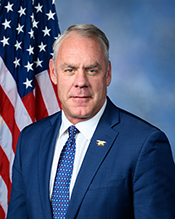
Representative Ryan Zinke announced on June 23 that more than $53.8 million in federal Payment in Lieu of Taxes funding has been released for Montana counties — a $7.3 million increase over what the state received in 2025.
Why PILT Matters in Montana
The Payment in Lieu of Taxes program compensates counties for the property tax revenue they cannot collect on federally owned land. In western Montana, that constraint is significant: roughly 80 percent of the land base is under federal ownership, encompassing national forests, national parks, wildlife refuges, and Bureau of Land Management holdings.
Without a revenue stream to replace lost property taxes, counties would face stark choices between cutting services or shifting the burden to private landowners. Montana counties direct PILT dollars toward road maintenance, law enforcement, emergency services, schools, and local infrastructure.
Zinke’s Role in the Appropriations Process
Zinke sits on the House Appropriations Committee and its Interior Appropriations Subcommittee, positions that gave him direct influence over the PILT allocation. He credited sustained advocacy for the funding increase.
“Western Montana is nearly 80% federal land,” Zinke said. “The counties cannot shoulder this burden alone. I fought nonstop to permanently and fully fund PILT and ensure full funding to counties to maintain roads, support law enforcement, fund emergency services, and keep property taxes affordable for local families.”
The total disbursement for Montana comes to $53,889,068, representing one of the larger annual allocations the state has received under the program.
Broader Context
The PILT debate has long centered on the tension between the federal government’s vast land holdings in the American West and the fiscal pressures those holdings impose on rural county governments. Montana’s situation is among the most acute in the country given the scale of federal ownership, particularly west of the Continental Divide.
Zinke has pushed for permanent, full PILT funding rather than the year-to-year appropriations process that has historically created uncertainty for county budget planners. A permanent authorization would allow counties to plan long-term capital spending rather than waiting on annual congressional action.
The funding release comes as Montana heads into the November 3 general election, with federal land management and rural economic policy among the prominent issues in statewide races. Zinke represents Montana’s 1st Congressional District, which covers western Montana — the region most directly affected by the federal land concentration.
County governments across Montana are expected to incorporate the new PILT disbursements into their fiscal year budgets for roads, public safety, and other essential services.