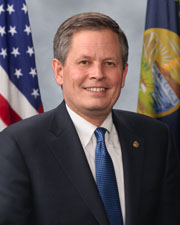
A bipartisan bill co-authored by Montana Sen. Steve Daines cleared a key Senate committee this week, moving the measure closer to a full Senate vote as lawmakers attempt to address the nation’s swelling national park infrastructure deficit — now estimated at $43 billion.
Bill Advances from Committee
The Senate Energy and Natural Resources Committee voted unanimously Wednesday to send the America the Beautiful Act to the full Senate floor. The legislation, co-sponsored by Daines and Maine Independent Sen. Angus King, proposes nearly $10 billion in new spending directed at deferred maintenance across the national park system.
The committee is chaired by Utah Republican Sen. Mike Lee, who notably opposed the original 2020 legislation the new bill builds upon. Lee expressed unresolved reservations about the new version but allowed it to advance, posing a pointed question: “If the intended purpose of the Great American Outdoors Act was to reduce the backlog, and six years later it’s significantly larger, what should Congress do?”
Background: A Growing Maintenance Gap
The America the Beautiful Act reauthorizes the Great American Outdoors Act, which Daines originally authored in 2020. That law created the Legacy Restoration Fund, which provides up to $2 billion annually for maintenance and infrastructure needs across the National Park Service, U.S. Forest Service, Bureau of Land Management, Fish and Wildlife Service, and Bureau of Indian Education.
Despite that funding stream, the deferred maintenance backlog has grown considerably. The deficit stood at roughly $26 billion when the original law passed in 2020; it has since expanded to an estimated $43 billion. In Montana alone, Yellowstone National Park carries an estimated $1.5 billion in outstanding maintenance needs.
The bill has attracted broad support, with 64 Senate cosponsors signed on ahead of the committee vote.
Provisions and Points of Contention
Among the bill’s provisions is a codification of a $100 surcharge on foreign visitors to national parks — a fee the Interior Department imposed administratively in July. Under the current system, parks retain 80 percent of gate fee revenue, with the remainder flowing to the National Park Service’s general fund. The new bill would direct all revenue from the foreign visitor surcharge into the Legacy Restoration Fund.
California Democratic Sen. Alex Padilla raised objections to that provision, warning that requiring park staff to verify visitor nationality could turn national parks into immigration enforcement points. “Parks could become de facto immigration checkpoints where hard-working Park Service staff would be required to check passports or birth certificates,” Padilla said.
Supporters of the surcharge provision argue that routing those dollars specifically to the restoration fund gives the fee a direct and accountable purpose.
What Comes Next
Before reaching President Donald Trump’s desk, the America the Beautiful Act must pass the full Senate and then be reconciled with a companion House version. Proponents are aiming for a symbolic signing date of July 4.
That timeline is ambitious. Senate floor scheduling, potential amendments, and House-Senate negotiations over differing provisions could all introduce delays. Lee’s lingering skepticism — even after allowing the bill to advance — may signal broader Republican concerns that could complicate the path forward.
Montana Stakes
For Montana, the legislation carries both policy and political significance. Daines, one of the bill’s primary architects, has staked considerable legislative capital on the measure as a signature conservation accomplishment. Yellowstone’s $1.5 billion maintenance backlog includes aging roads, deteriorating visitor facilities, and critical infrastructure that has gone unaddressed for years.
The broader national park system draws millions of visitors annually and supports substantial tourism economies in gateway communities across the state. Accelerated infrastructure investment at parks like Yellowstone and Glacier National Park would have direct economic implications for Montana communities that depend on outdoor recreation and tourism.
Whether Congress can thread the procedural needle and deliver a signed bill by Independence Day remains to be seen, but Wednesday’s unanimous committee vote represents meaningful momentum for Daines and the bill’s supporters.